


· By seoanalytics analytics
Freeze Dried Beef Liver Treats For Dogs: Can Dogs Eat Them Every Day?
Freeze dried beef liver treats for dogs are one of the most nutrient-dense “single-ingredient” options on the market. But that density cuts both ways. Liver is loaded with vitamin A, copper, and highly bioavailable protein, which is great in small doses and risky in daily, uncontrolled amounts.
Why this matters now: treat feeding has climbed alongside premiumization. In 2024, treats and toppers were one of the fastest-growing segments in US pet, with US pet industry spending reaching $147.0B(APPA, 2024). In 2026, owners are using freeze-dried treats as training currency, enrichment, and “food sprinkles” on every meal, which can quietly push key micronutrients above safe ranges.
In this guide you will learn how often dogs can safely eat beef liver, how to calculate an evidence-based daily amount, what signs to watch for, and how to pick the best beef liver treats for dogs based on sourcing, testing, and transparency.
What freeze-dried beef liver is and why dogs crave it
Freeze-drying removes moisture at low temperature, preserving aroma compounds and nutrients better than high-heat dehydration in many cases. That is why dried beef liver treats for dogssmell intense, break into perfect training bits, and trigger immediate motivation.
Freeze-dried vs. dehydrated: what changes nutritionally
Both are “dry” treats, but the process matters. Freeze-drying generally preserves heat-sensitive nutrients and creates a light, porous texture that rehydrates quickly. Dehydration can be perfectly safe too, but it may darken proteins and reduce some heat-sensitive vitamins depending on time and temperature.
Why liver is uniquely potent
Liver is not “just meat.” It is an organ that stores fat-soluble vitamins and minerals. Beef liver commonly contains high levels of preformed vitamin A and copper. These are essential nutrients, but unlike many B vitamins, they can accumulate when intake stays high over time.
Key point: liver is best treated like a supplement, not a free-feed snack.
Can dogs eat freeze-dried beef liver every day? The evidence-based answer
Yes, many dogs can eat small amounts daily, but “daily” is only safe when the portion is controlled and the rest of the diet is balanced. The main risks are long-term micronutrient excess and calorie creep.
Daily treat limits: start with calories first
Veterinary nutrition guidelines commonly recommend keeping treats to 10% or less of daily calories to avoid unbalancing the diet (WSAVA Global Nutrition Guidelines, accessed 2025). That is the simplest safety rail because it automatically caps “nutrient hitchhikers” like vitamin A and copper.
Then you tighten further for liver specifically, because liver is disproportionately rich compared to muscle meat.
The real nutrition math: vitamin A, copper, and calorie creep
The safety conversation is mainly about preformed vitamin A (retinol) and copper. Chronic excess vitamin A can contribute to skeletal changes over time, while copper can accumulate in predisposed dogs (especially certain breeds).
What the standards actually say (and why they matter)
AAFCO and FEDIAF publish nutrient profiles for complete diets, not treats. Still, those profiles are the best public benchmark for what “balanced” means. When treats consistently add concentrated nutrients, the total daily intake can drift far above intended levels.
For example, FEDIAF provides nutritional guidelines for dogs and cats that include recommended and maximum levels for key nutrients in complete foods (FEDIAF Nutritional Guidelines, 2024). Treats are not required to meet these profiles, which is exactly why portion control matters.
Calorie creep is the sneaky problem most owners miss
Even “clean” treats add calories. In the US, 59% of dogs were estimated to be overweight or obese (Association for Pet Obesity Prevention, 2023). Daily liver treat habits can push a dog from stable weight to slow gain, especially after spay or neuter, or in low-activity seasons.
Actionable rule: if you add liver treats daily, reduce meal portions accordingly. If you cannot commit to that adjustment, do not feed liver daily.

How much freeze-dried beef liver per day? A practical dosing framework
The safest approach is a two-step framework: cap treats by calories, then cap liver by frequency and body size. Because treat calorie labels vary by brand, use the package kcal when available. If not listed, treat it as “energy dense” and stay conservative.
Daily use guide by dog size (conservative starting point)
This table is intentionally cautious because nutrient density varies widely across products and cuts. Use it as a starting range, then personalize with your veterinarian, especially for dogs with liver disease, copper issues, or pancreatitis history.
|
Dog size |
Goal for beef liver treat use |
Conservative frequency |
Practical portion strategy |
|---|---|---|---|
|
Under 10 lb (toy) |
High-value training only |
1 to 3 days/week |
Crumble to tiny flecks; aim for 5 to 15 total “micro-rewards” |
|
10 to 25 lb (small) |
Training plus occasional topper |
2 to 4 days/week |
Pea-size pieces; swap meal calories if used as topper |
|
26 to 60 lb (medium) |
Training, enrichment, rotation treat |
3 to 5 days/week |
Break into small cubes; keep within treat calorie budget |
|
61 lb+ (large/giant) |
Training and rotation treat |
Up to daily if micro-dosed |
Use as “jackpot” rewards; still rotate to avoid micronutrient stacking |
Best practice: if your dog’s main diet already includes organ meat (common in many “ancestral,” “raw-inspired,” and premium kibbles), cut the table frequency in half.
Real-world feeding scenarios (with “what if” answers)
Owners rarely feed treats in a vacuum. They feed them during walks, daycare, training classes, and busy weeks. Here are practical scenarios and how to handle them without giving up the benefits of freeze-dried liver.
Scenario 1: “I train daily and need high-value rewards”
Use liver as 5% to 20%of your reward volume, not 100%. Fill the rest with lower-density options (freeze-dried whitefish, boiled chicken breast, kibble from the daily ration). You keep motivation high while reducing the risk of daily micronutrient overload.
Scenario 2: “My dog is picky, so I top every meal with liver”
Switch from “every meal topper” to “every other day micro-dust.” Also rule out dental pain, GI upset, or overfeeding. Appetite issues are often behavioural or medical, not a flavour problem.
Scenario 3: “My dog eats a raw or fresh diet that already includes organs”
In many raw frameworks, liver is already included at a small percentage of the overall diet. Adding extra liver treats can double that. Use lean single-ingredient treats instead, or rotate to non-liver options most days.
Scenario 4: “My dog has itchy skin. Could beef liver be the trigger?”
Beef can be an allergen for some dogs, though true food allergy is less common than owners assume. If itching worsens after adding liver, pause and run a structured elimination approach with your veterinarian. Random swapping creates noise and delays answers.
Conclusion
If you want a cleaner, simpler treat strategy, build a rotation that uses liver as the “primal jackpot” and lean single-ingredient proteins for everyday reps. Your dog stays driven. Your nutrition stays balanced.
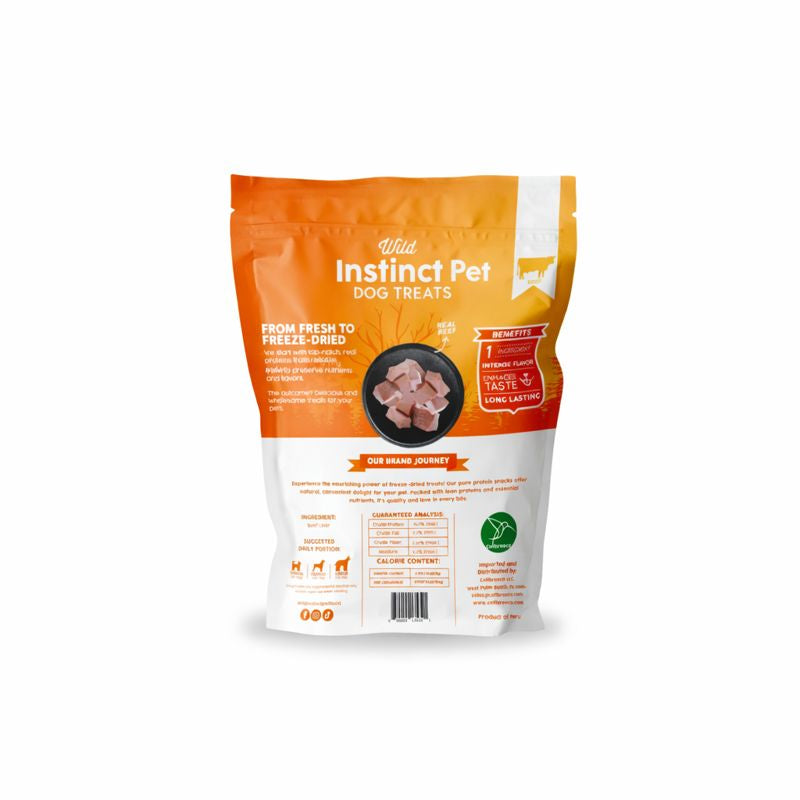
Wild Instinct Pet is here to help you choose single-ingredient rewards with real standards, not just good marketing. If you want help picking the right treat rotation for your dog’s size, age, and goals, contact us through our website support form and include your dog’s weight, age, main food brand, and how many treats you use per day.
Frequently asked questions
Can dogs eat freeze-dried beef liver every day?
Some dogs can, but only in very small, controlled portions. Keep treats to 10% or less of daily calories (WSAVA Global Nutrition Guidelines, accessed 2025) and consider feeding liver only a few days per week if your dog’s main food already includes organs.
How much freeze-dried beef liver should I give my dog per day?
Use a calorie budget first, then micro-dose liver within that budget. Start conservatively, especially for small dogs, and adjust based on body weight trends every 2 to 4 weeks.
Is beef liver good for dogs or is it too rich?
Beef liver is nutrient-dense and can be beneficial in small amounts. It can be “too rich” when overfed because it concentrates fat-soluble vitamins and minerals that can accumulate over time.
What are signs my dog is getting too much liver?
Short term, you may see loose stool, vomiting, or appetite changes. Long term, the concern is chronic excess of nutrients like vitamin A and copper, which is not always obvious day to day. If you are feeding liver daily and any symptoms appear, stop and consult your veterinarian.
Are freeze-dried liver treats safer than dehydrated liver treats?
Neither is automatically safer. Freeze-dried treats often preserve aroma and nutrients well, while dehydrated treats vary by heat and time. Safety depends more on sourcing, pathogen controls, and testing than the drying method.
Can puppies have freeze-dried beef liver treats?
Yes, but keep amounts very small. Puppies need tight nutrient balance during growth, so treats should stay minimal and the primary diet should be a complete-and-balanced puppy food.
Can dogs with pancreatitis eat beef liver treats?
It depends on the dog and the product’s fat and calorie density. Many pancreatitis-prone dogs do better with leaner rewards and strict portion control. Ask your veterinarian for treat parameters specific to your dog’s history.
Does beef liver help with anemia or low iron in dogs?
Liver contains iron, but you should not self-treat suspected anemia with treats. Anemia has many causes, some urgent. If you suspect anemia, get veterinary diagnostics and follow a prescribed plan.
What should I look for when buying the best beef liver treats for dogs?
Choose a true single-ingredient product with clear country of origin, lot traceability, and transparent pathogen testing claims. Also prioritize brands that publish calories per serving so you can stay within safe daily limits.
Can I use beef liver as a meal topper every day?
You can, but it is easy to overdo. A better approach is a light “dusting” on select days and rotating with leaner toppers. If your dog needs daily toppers to eat, talk with your vet to rule out medical or feeding-structure issues.
