


· By seoanalytics analytics
12 Delicious Ways To Serve Turkey Liver Freeze Dry Treats To Cats
Cats are obligate carnivores, yet many households still struggle to find treats that are both irresistible and nutritionally purposeful. In 2026, “clean-label” pet snacking is no longer niche. It is mainstream. The global pet treats market is projected to surpass US$30 billion by 2030 (Grand View Research, 2023), and freeze-dried, single-ingredient options are among the fastest-growing premium segments because they align with what cats are built to eat.
This guide focuses on turkey liver freeze dry treats and exactly how to serve them in ways that boost enrichment, support picky eaters, and fit real-life routines. You will learn 12 practical serving ideas, portioning rules, safety guardrails, and what’s changing in 2026 around sourcing, quality testing, and labeling.
Why freeze-dried turkey liver is a smart cat treat in 2026
Freeze-dried turkey liver is a single-ingredient treat that delivers intense aroma, palatability, and a nutrient-dense bite size. Because freeze-drying removes water at low temperature, it tends to preserve flavor compounds that make cats lock in fast. That matters because smell drives feline food acceptance more than most owners realize.
From a nutrition lens, liver is naturally rich in fat-soluble vitamins, especially vitamin A. That is both the benefit and the reason you must portion it intelligently. AAFCO and veterinary nutrition texts consistently flag that excess vitamin A over time can be harmful. Treats should stay as treats, not become the diet.
Why this matters now: in 2026, pet parents are demanding proof, not promises. Retailers and marketplaces are also tightening quality expectations, with more emphasis on pathogen control, lot traceability, and third-party testing. You will see more brands publishing COAs, specifying country of origin, and highlighting batch testing for Salmonella and Listeria where applicable.
Quick nutrition and safety guardrails (read before serving)
Turkey liver for cat treats can be an excellent add-on, but it should not displace complete and balanced food. A practical baseline used in many vet clinics is to keep treats to 10% or less of daily calories (WSAVA Global Nutrition Committee, 2021). That single rule prevents most long-term “too much of a good thing” problems.
Also important: freeze-dried does not automatically mean sterile. Handling matters. The FDA continues to publish reminders that pet foods, including treats, can carry pathogens and should be handled like raw ingredients (FDA, 2023). Wash hands after serving, avoid letting immunocompromised humans handle treats, and store tightly sealed.
Portioning rule of thumb for liver treats
Liver is nutrient-dense. For most healthy adult cats, start with 1 to 3 small pieces per day depending on size and the rest of the diet. If your cat eats a high-liver canned food or a raw diet with organs, scale treats down. If your cat is on a therapeutic diet, ask your veterinarian first.
How to choose high-quality freeze-dried turkey liver cat treats
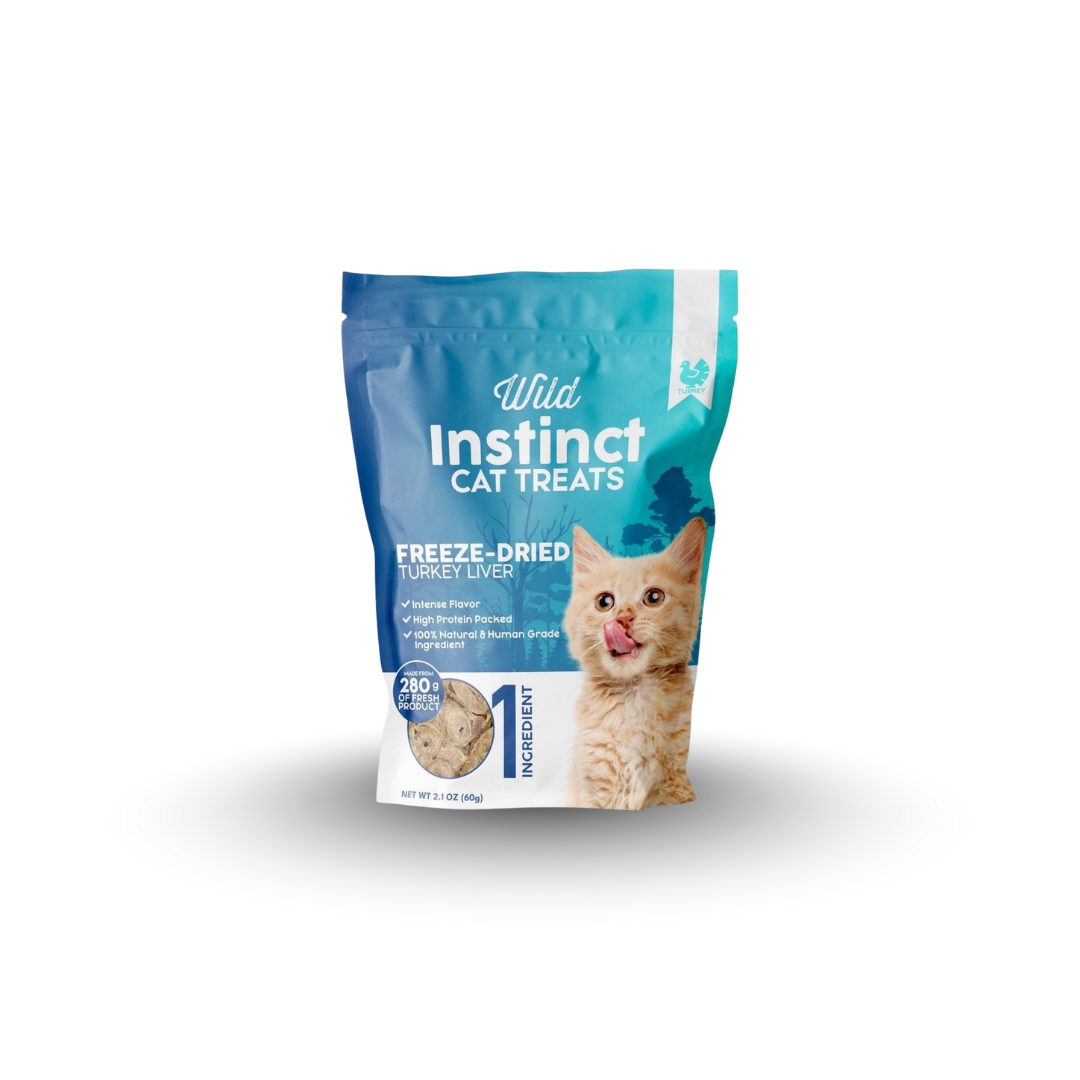
Not all freeze-dried turkey liver is equal. In 2026, “premium” should mean more than marketing language. Look for objective quality signals: transparent sourcing, batch testing, and clear ingredient statements. Single-ingredient products should list only turkey liver, not glycerin, starches, smoke flavor, or “natural flavors.”
Best-practice checklist (what we look for at Wild Instinct Pet)
Trend watch for 2026: more specialty retailers are prioritizing “verification-ready brands.” That means brands that can quickly provide documentation when a platform, retailer, or vet clinic requests it. Consumers are also buying more through subscription and reorder flows, so consistency across batches is becoming a competitive advantage.
12 delicious ways to serve turkey liver freeze dry treats to cats
Below are practical, repeatable ways to serve freeze-dried turkey liver that improve acceptance, slow down fast eaters, reduce boredom, and support training. Rotate methods to keep novelty high and begging behavior lower.
1) The classic hand-feed “high value” reward
Use one small piece as a reward for calm behavior: sitting, coming when called, entering the carrier, or tolerating nail trims. Cats learn through immediate reinforcement. Keep sessions short and end on a win.
2) Crush-and-sprinkle topper for picky eaters
Turn a piece into powder between your fingers or with a spoon and dust it over wet food. Aroma blooms fast and can jump-start appetite. This is one of the most effective uses of freeze-dried turkey liver for cats that “walk away” from meals.
3) Rehydrated “liver gravy” for hydration support
Soak a piece in 1 to 2 tablespoons of warm water for 2 to 5 minutes, then mash into a thin gravy and pour over food. This adds smell and moisture. It is a practical trick for cats that do better with higher water intake, especially those eating mostly dry food.
4) Puzzle feeder power-up (slow the inhale)
Break treats into tiny bits and place them in a puzzle toy or treat ball designed for cats. This turns snacking into hunting behavior. Enrichment matters because boredom is linked to stress behaviors in indoor cats.
5) “Treasure hunt” scent trail
Drag a small piece lightly across a cat-safe mat or floor (no essential oils, no cleaners), then hide a few crumbs in 3 to 5 locations. Let your cat sniff and search. This is a low-cost enrichment routine that mimics natural foraging.
6) Clicker training jackpot
Reserve turkey liver freeze dry treats only for training, not random snacking. In learning theory, exclusivity increases reward value. Start with one behavior (touch a target, step onto a mat) and reward instantly after the click.
7) Carrier “confidence crumbs” for vet visits
Place a few crumbs inside the carrier 10 minutes before your cat explores it. Then reward any voluntary step inside. This builds positive association over time and can reduce transport stress.
8) The “two-texture” bowl for food boredom
Serve your cat’s normal wet food, then add a few dry, crunchy liver bits on top right before serving. The contrast can re-engage cats that are bored with uniform texture. This is especially useful when transitioning brands or flavors slowly.
9) Post-play recovery bite
After 5 to 10 minutes of wand play, offer one small piece. This mimics the hunt-catch-eat sequence and can help settle some cats after high arousal play. Keep it small to avoid reinforcing rough play with big food payouts.
10) Micro-crumb “medicine mask” (when allowed)
If your veterinarian approves, use crushed treat dust to coat the outside of a pill pocket or the rim of a small food ball that contains medication. Do not use this to hide meds in a way that prevents your cat from getting the full dose. If your cat starts refusing the treat, stop and switch strategies.
11) Frozen enrichment cube (warm weather and fast eaters)
Mix rehydrated liver mash with a spoon of wet food, press into an ice cube tray, and freeze. Serve one cube in a bowl or lick mat. This slows intake and adds sensory enrichment.
12) “New cat” bonding ritual
For shy or recently adopted cats, place a small piece 2 to 3 feet away and sit quietly. Over days, shorten the distance. The goal is association without pressure. Food should never be used to lure a cat into a forced interaction.
Serving guide: best method by goal (with a practical table)
Use the table below to match the serving method to your goal, plus a quick “watch-out” so you do not accidentally create new problems like begging, food guarding, or overeating.
|
Goal |
Best serving method |
Watch-out |
Best for |
|---|---|---|---|
|
Picky eating |
Crush-and-sprinkle topper |
Do not over-top daily or you may reduce acceptance of the base diet |
Finicky adults, post-dental cats |
|
Hydration support |
Rehydrated “liver gravy” |
Discard leftovers within 30 to 60 minutes |
Dry-food households |
|
Weight control |
Puzzle feeder micro-bits |
Measure treat amount first, do not free-pour |
Food-motivated cats |
|
Vet and handling stress |
Carrier confidence crumbs + hand-feed calm |
Reward calm, not struggling |
Carrier-averse cats |
|
Enrichment and boredom |
Treasure hunt scent trail |
Avoid hiding in unsafe spots (plants, cords, litter area) |
Indoor-only cats |
What’s changing in 2026: trends shaping freeze-dried turkey liver treats
Cat treat buying behavior has shifted hard toward “functional simplicity.” Owners want fewer ingredients, clearer sourcing, and proof of quality. This mirrors broader pet nutrition trends, where consumers increasingly treat pet food like human food, prioritizing safety signals and transparency.
Three 2026 developments to watch:
Also relevant: obesity remains a persistent problem. In the latest published large-scale snapshot, an estimated 61% of cats were overweight or obese in the U.S. (Association for Pet Obesity Prevention, 2022). High-value treats like turkey liver freeze dry should be used strategically, not casually.
Common mistakes to avoid (and pro tips that actually work)
Most issues with natural turkey liver cat treats come down to two things: portion creep and using treats to solve the wrong problem. Fix those, and turkey liver can be a clean, powerful tool in your routine.
Mistake 1: Treats become “side meals”
If you are grabbing handfuls, you are likely blowing past the 10% treat-calorie rule(WSAVA, 2021). Pre-portion a daily amount into a small container. When it is gone, it is gone.
Mistake 2: Using liver daily to force acceptance of a poor-fit diet
If your cat only eats when topped heavily, the base food may not be working. Consider a slow transition to a more palatable complete diet, check dental health, and rule out nausea or pain with your veterinarian.
Mistake 3: Skipping a slow introduction
Even single-ingredient treats can cause GI upset when introduced too quickly. Start with a crumb-sized amount, then scale over 3 to 7 days while watching stool and appetite.
Mistake 4: Unsafe storage and handling
Close the bag tightly. Keep it dry. Wash hands after handling. Do not let small children share snacks with pets, and do not allow face-licking right after treat time.
Real-world scenarios: how cat owners use freeze-dried turkey liver effectively
Scenario A: “My cat refuses new food”
Use the crush-and-sprinkle method for 3 days while mixing 10% of the new food into the old. Increase the new food by 10% every 2 to 3 days if stools stay normal. If your cat fully refuses food for 24 hours, stop and call your vet. Cats are vulnerable to hepatic lipidosis when they do not eat.
Scenario B: “My cat is bored and starts trouble at night”
Do a 7-minute wand play session, then a puzzle feeder with micro-bits of freeze-dried turkey liver. Finish with a small meal. This mimics hunt-catch-eat and often improves settling routines.
Scenario C: “I need my cat to accept the carrier”
Feed high-value crumbs only near and inside the carrier for 2 weeks. Keep the carrier out full-time with soft bedding. Your goal is voluntary entry, not forced loading.
How to order turkey liver cat treats with confidence (quality, price, and freshness)
If you plan to order turkey liver cat treats online, buy as if you are buying a perishable ingredient. Even shelf-stable products can be compromised by poor packaging or heat exposure.
Cost reality: freeze-dried organ treats are typically priced as premium products because of raw material cost, yield loss during drying, and quality controls. A practical way to compare value is cost per serving, not cost per bag. If one brand uses larger chunks, you may be able to use fewer pieces.
Conclusion
Freeze-dried turkey liver can be more than a snack. Used with intention, it becomes a tool for appetite, enrichment, training, and calmer vet routines.
If you want clean, simple, vet-trust focused treats, Wild Instinct Pet builds routines around single-ingredient nutrition that matches the cat’s primal design. Contact us to get help choosing the right freeze-dried format for your cat’s needs, sensitivities, and lifestyle, and to learn the best way to order turkey liver cat treats for consistent quality.
Frequently asked questions
What is turkey liver freeze dry, and is it raw?
Turkey liver freeze dry treats are made by removing moisture from raw or cooked liver using low-temperature sublimation. Many are produced from raw liver, but the end product is dry and shelf-stable. Because freeze-dried treats are not guaranteed sterile, handle them with good hygiene.
Is freeze-dried turkey liver good for cats every day?
It can be, but only in small amounts. Keep treats at 10% or less of daily calories to avoid unbalancing the diet (WSAVA, 2021). If your cat eats organ-rich meals already, offer liver treats less often.
How much freeze dried turkey liver should I give my cat?
Start with a crumb to test tolerance, then typically 1 to 3 small pieces per day for most adult cats. The right amount depends on your cat’s weight, body condition, and total daily calories. Ask your vet if your cat has kidney disease, pancreatitis history, or is on a prescription diet.
Can turkey liver for cat treats cause vitamin A toxicity?
Yes, if fed in excess over time. Liver is naturally high in vitamin A, so treat portions must stay small and occasional relative to the complete diet. If you are feeding a raw diet with organs, be extra conservative with liver treats.
Are freeze-dried turkey liver cat treats safe for kittens?
In tiny amounts, they can be used as high-value training rewards, but kittens need complete growth nutrition first. Keep portions very small and avoid replacing balanced meals. When in doubt, ask your veterinarian for kitten-safe treat guidance.
How do I rehydrate freeze-dried turkey liver for my cat?
Soak a piece in warm water for 2 to 5 minutes, then mash it into a soft paste or gravy. Serve immediately and discard leftovers within 30 to 60 minutes for best hygiene. This method can also increase aroma for picky cats.
Can I use natural turkey liver cat treats for training and nail trims?
Yes. Use very small pieces, reward calm behavior, and keep sessions short. Many cats respond best when turkey liver is reserved only for handling and vet-related routines.
Why does my cat throw up after freeze-dried liver treats?
The most common causes are eating too fast, too large a piece, or introducing the treat too quickly. Break treats into smaller bits and reduce frequency for a week. If vomiting persists, stop treats and contact your veterinarian to rule out GI disease or food intolerance.
Should I choose freeze-dried turkey liver vs dehydrated liver?
Freeze-drying generally preserves aroma and texture well because it uses lower heat, which can matter for picky cats. Dehydrated treats can still be good but may be harder, darker, or more cooked-smelling depending on process. Choose based on your cat’s preference and the brand’s testing and sourcing transparency.
What should I look for when I order turkey liver cat treats online?
Look for single-ingredient labels, visible lot codes, best-by dating, and clear sourcing. Prefer brands that discuss pathogen testing and quality controls. Order bag sizes that match your usage so the product stays crisp and dry after opening.
