


· By seoanalytics analytics
Freeze Dried Turkey Hearts For Cats Organic: 2026 Benefits, Safety, And Pro Tips
Nearly 60% of cats in the U.S. are overweight or have obesity, a risk factor tied to diabetes, arthritis, and shorter lifespan (Association for Pet Obesity Prevention, 2022). In 2026, more cat parents are responding the same way: fewer fillers, more protein, and treats that do real nutritional work. That is where freeze dried turkey hearts for cats organic earns its spotlight.
Organic freeze-dried turkey hearts are simple, species-appropriate, and naturally rich in key nutrients like taurine and B vitamins. But “healthy” still depends on sourcing, handling, and portioning. This guide breaks down what mattersin 2026: organic standards, nutrient reality, portion math, safety checks, and how to pick a product you can trust. You will leave with practical feeding tips, label-reading shortcuts, and buying criteria that help you confidently choose healthy turkey hearts cat treats.
Why turkey hearts are a high-value treat for cats?
Cats are obligate carnivores. Their physiology is built around animal-based protein and specific nutrients found most reliably in animal tissues. Hearts are muscle meat, but nutritionally they behave like a “power cut” due to their taurine, B vitamins, and heme iron.
Taurine and the “heart-food” advantage
Taurine is essential for cats. Deficiency is linked to retinal degeneration and dilated cardiomyopathy. While complete cat foods are formulated to meet taurine needs, treats can either support that foundation or dilute it. Turkey heart is naturally taurine-containing, making turkey hearts for cats a smarter treat choice than carb-heavy snacks.
Protein-forward treats that align with weight goals
High-protein, low-carbohydrate treats tend to fit modern weight-management plans. This matters because obesity is common and persistent in pet populations. When treats stay animal-based and portioned correctly, they are easier to “budget” into daily calories without pushing cats toward excess carbs.
Palatability for picky cats
Freeze-drying preserves aroma compounds better than many baked treat processes, which often matters for finicky cats. If your cat turns down new foods, natural turkey hearts cat snacks are often accepted because they smell like real meat.
Organic + freeze-dried in 2026: what it really means
“Organic” and “freeze-dried” are not just marketing words in 2026. They reflect two separate systems: agricultural certification and processing method. Understanding both helps you choose organic freeze dried turkey hearts for cats that are genuinely higher-integrity.
Organic standards: what you are actually paying for
In the U.S., “organic” claims for animal ingredients typically align with USDA organic standards for how animals are raised and how feed is produced. For buyers, the practical takeaways are fewer prohibited inputs and more transparent chain-of-custody expectations. In 2026, shoppers increasingly look for third-party verification and lot-level traceability, not just a front-label claim.
Freeze-drying vs dehydrating: why it changes nutrient retention
Freeze-drying removes water at low temperatures via sublimation. That tends to preserve structure, aroma, and heat-sensitive nutrients better than high-heat dehydration. While exact retention varies by process, the core benefit is consistent: you get a shelf-stable, lightweight treat that rehydrates quickly and keeps “raw-like” appeal.
2026 trend: transparency is now a buying requirement
Across the pet food market, transparency has become a differentiator. About 77% of global consumers say they consider “product safety” important when choosing food(International Food Information Council, 2023). Pet owners are applying the same mindset to pet treats, especially animal-organ products. Brands responding in 2026 are publishing more sourcing details, testing practices, and “made in” clarity.
Nutritional profile: what turkey hearts add (and what they do not)
Turkey hearts can be a nutrient-dense add-on, but they are still a treat. The goal is to complement a complete and balanced diet, not replace it.
Why calorie awareness matters right now?
Obesity risk is the backdrop to every treat decision. The veterinary community continues to emphasize treat limits, with a widely used rule of thumb: keep treats to 10% or less of total daily calories to protect nutrient balance and weight goals (WSAVA Nutrition Toolkit, updated guidance widely referenced in clinical practice; WSAVA, 2020).
How to feed freeze-dried turkey hearts safely (with practical portioning)?
Feeding is where good intentions can go sideways. The fix is simple: portion with purpose, rehydrate when appropriate, and match treat strategy to your cat’s health profile.
Rehydration: when it helps and how to do it
Many cats run on the edge of low thirst drive. Rehydrating treats can support moisture intake. For cats prone to constipation or urinary issues, rehydration is a low-effort upgrade.
What to look for when you order turkey hearts cat treats in 2026?
In 2026, premium treats are expected to meet the same trust bar as premium foods. Use this checklist to buy confidently when you order turkey hearts cat treats.
Quick comparison table: treat formats that compete with freeze-dried hearts
|
Format |
Pros |
Tradeoffs |
Best use case |
|---|---|---|---|
|
Freeze-dried turkey hearts |
High palatability, lightweight, often single-ingredient, fast to rehydrate |
Calorie-dense; can absorb moisture if left open |
Training micro-treats, topper, picky cats |
|
Dehydrated organ treats |
Often less expensive; shelf-stable |
Usually higher heat processing; aroma and texture can vary |
Budget-friendly snacking, less picky cats |
|
Soft chewy treats |
Easy to portion; widely available |
Often contains binders, humectants, or mixed ingredients |
Pill masking, cats that dislike crunch |
|
Wet “lick” treats |
Extra moisture; very palatable |
Often multi-ingredient; harder to control additives |
Hydration support, bonding, enrichment |

Common mistakes to avoid (and pro tips that actually work)
Most problems with healthy turkey hearts cat treats come from dosing, storage, or unrealistic expectations. Fix those three and you unlock the benefits without the downsides.
Mistake 1: treating “single-ingredient” as unlimited
Even clean treats can push calories over target. Pro tip: pre-portion a weekly treat jar. When it is empty, treats are done until refill day. This makes consistency effortless.
Mistake 2: not accounting for dental and choking considerations
Freeze-dried pieces can be airy and crunchy. Some cats gulp. Pro tip:crumble hearts into smaller flakes or rehydrate for cats that eat fast, have dental disease, or are prone to vomiting after rapid eating.
Mistake 3: poor storage that invites moisture and spoilage risk
Freeze-dried treats are hygroscopic. They pull moisture from the air. Pro tip:reseal immediately, store in a cool, dry cabinet, and use within the brand’s recommended window after opening. If texture becomes leathery or smells “stale,” replace the bag.
Mistake 4: using treats to “balance” a weak base diet
Treats cannot fix an incomplete diet. Pro tip:choose a complete and balanced cat food first, then use turkey hearts as a precision tool for enrichment, training, and bonding.
2026 market and safety trends shaping organic freeze-dried treats
Pet treat buying in 2026 looks different than it did even a few years ago. Consumers are demanding cleaner labels, while brands are tightening quality systems due to higher scrutiny and faster social amplification of safety concerns.
Trend 1: stronger recall awareness and faster brand accountability
Recalls remain a real part of the pet ecosystem. In the U.S., the FDA has logged thousands of pet food and treat recalls and market actions over time, with online recall visibility making brand response speed critical (FDA Recalls, Market Withdrawals, and Safety Alerts database; ongoing). In 2026, best-in-class treat makers treat traceability and testing as non-negotiable operations, not marketing.
Trend 2: “functional simplicity” is winning
Instead of long ingredient lists, the trend is fewer ingredients with clearer purpose. Single-ingredient organ treats fit this shift. They also match the broader consumer move toward minimally processed foods. About 85% of consumers globally reported changing what they eat and drink to be healthier(NielsenIQ, 2023), and pet owners increasingly mirror that behavior for their cats.
Trend 3: premiumization continues despite economic pressure
Even with price sensitivity, pet parents still prioritize perceived safety and quality. U.S. pet industry spending reached about $147 billion in 2023, reflecting durable demand for pet nutrition and care (American Pet Products Association, 2024 report on 2023 spending). In 2026, the “premium treat” category remains resilient, especially for products positioned as clean, traceable, and species-appropriate.
Practical ways to use turkey hearts (training, enrichment, and picky eating)
Freeze-dried hearts are not just a snack. They are a behavior tool and an enrichment lever. Use them strategically and you will see better compliance, smoother routines, and less mealtime stress.
Picky eating: a cleaner topper strategy
For cats who stall at the bowl, a pinch of crushed heart can increase aroma and engagement. Keep topper use consistent and minimal so the base diet stays the main event. If your cat refuses food for more than 24 hours, contact your veterinarian because cats are vulnerable to hepatic lipidosis with prolonged anorexia.
Conclusion
Organic freeze-dried turkey hearts are one of the cleanest ways to treat a cat like a carnivore while still feeding responsibly. The magic is not hype. It is simplicity plus standards.
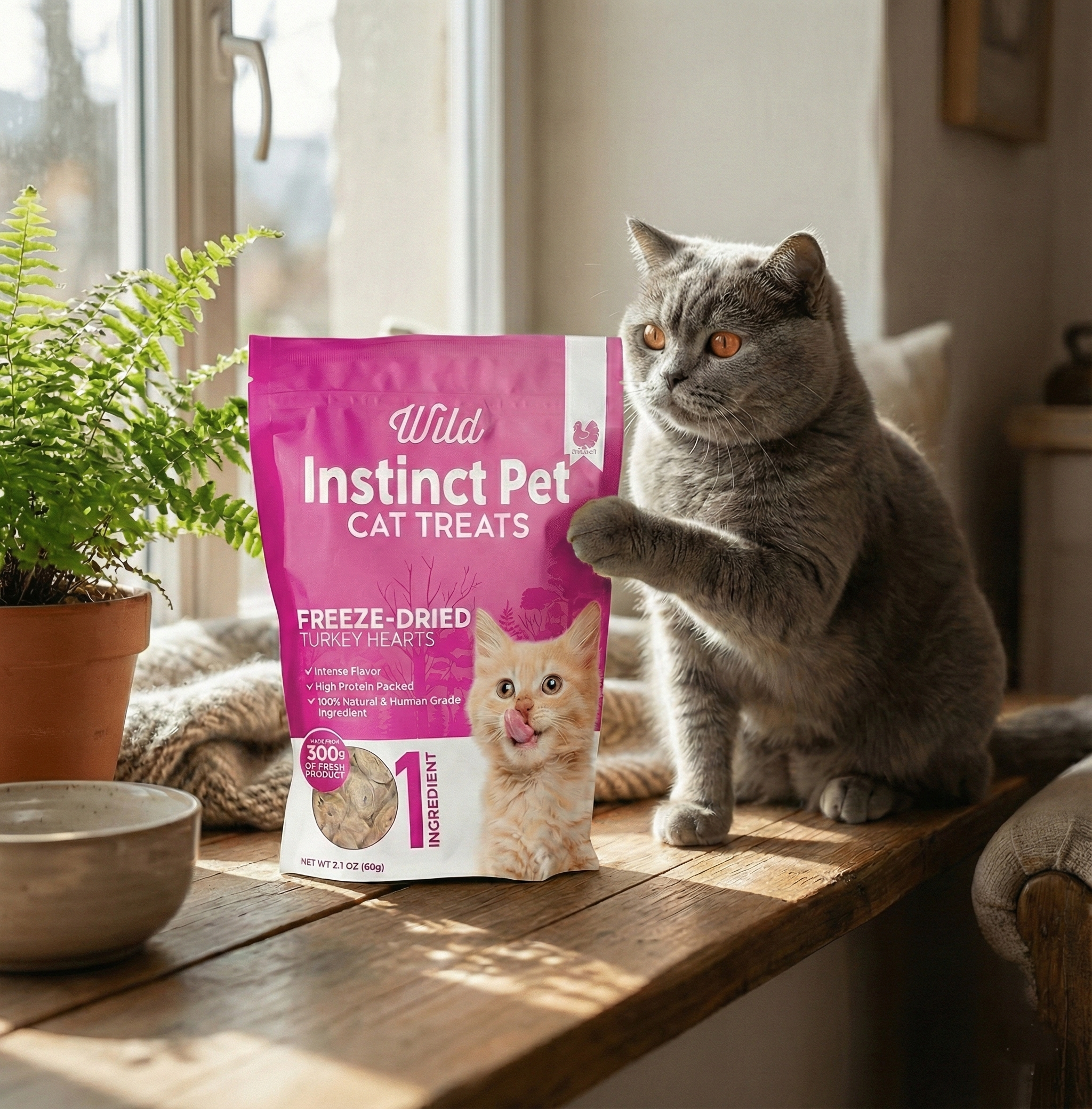
If you want a cleaner treat routine in 2026, start with one change: replace filler-heavy snacks with a single-ingredient option you can pronounce and verify. That is the Wild Instinct Pet way. When you are ready to upgrade your treat strategy, explore our freeze-dried, single-ingredient philosophy and build a smarter rotation for your cat.
Visit Wild Instinct Pet to ask about sourcing, lot traceability, or picking the right treat for your cat’s age and health goals.
Frequently asked questions
Q1: What are freeze dried turkey hearts for cats organic, exactly?
They are turkey hearts that have been freeze-dried for shelf stability, sourced from organic production systems when properly certified. Most quality products are single-ingredient. They are used as treats, toppers, or training rewards, not as a complete diet.
Q2: Are organic freeze dried turkey hearts for cats safe to feed every day?
For most healthy cats, they can be fed daily in small amounts if treats stay at or under about 10% of daily calories (WSAVA, 2020). Safety also depends on storage, freshness, and your cat’s medical status. If your cat is on a prescription diet, confirm treat compatibility with your veterinarian.
Q3: How many turkey hearts can I give my cat per day?
It depends on your cat’s calorie budget and the treat’s calorie density. A practical approach is to limit treats to 10% of daily calories and use hearts as micro-treats by breaking them into small pieces. If weight loss is a goal, reduce treat frequency and use enrichment without extra calories.
Q4: Should I rehydrate freeze-dried turkey hearts before feeding?
Rehydration is optional, but it can help cats that prefer softer textures or need more moisture intake. Add warm water and allow a few minutes to soften. Discard leftovers and do not leave rehydrated meat out for extended periods.
Q5: Can kittens eat turkey hearts for cats?
Yes, in tiny portions, as long as the kitten is primarily eating a complete and balanced growth diet. Introduce slowly to avoid digestive upset. For very young kittens, softer rehydrated pieces are often easier.
Q6: Do turkey hearts provide enough taurine for cats?
Turkey hearts naturally contain taurine, but treat amounts are usually too small to rely on as the primary taurine source. Your cat’s complete diet should supply required taurine levels. Think of turkey hearts as supportive, not foundational.
Q7: Are natural turkey hearts cat snacks better than mixed-ingredient treats?
Single-ingredient treats can be easier to evaluate and may be useful for cats with sensitivities because there is less ingredient complexity. Mixed treats can still be fine, but they often include binders, flavors, or sweeteners that add calories without adding species-appropriate nutrition. The best choice is the one that fits your cat’s health needs and your quality standards.
Q8: What is the difference between freeze-dried and dehydrated turkey heart treats?
Freeze-dried treats are processed at lower temperatures and often retain more aroma and “raw-like” texture. Dehydrated treats typically use more heat and can be tougher or more variable in smell and crunch. Both can be safe and useful if made with good controls and fed in correct portions.
Q9: Can cats with kidney disease have healthy turkey hearts cat treats?
Maybe, but this is a veterinarian-guided decision because phosphorus management is often important in kidney disease. If your cat is on a renal diet, treats can undermine the nutrition strategy if they are not accounted for. Ask your veterinarian for a treat allowance and approved options.
Q10: Where can I order turkey hearts cat treats with reliable quality?
Choose brands that provide clear sourcing, transparent ingredient lists, lot coding, and stated quality controls. Look for products that are single-ingredient and packaged to protect against moisture and oxidation. If a company cannot answer basic questions about origin, testing, and traceability, consider that a red flag.
