


· By seoanalytics analytics
Turkey Liver Treats For Dogs: The 2026 Dog Owner’s Guide To Safer, Smarter Snacking
Turkey liver treats for dogs are having a moment in 2026 and not just because pets love the taste. The bigger story is trust. Pet owners are demanding fewer ingredients, more transparency, and tighter safety standards. That aligns perfectly with single-ingredient organ treats, especially when they are freeze-dried and easy to portion. In fact, U.S. pet industry spending reached $147.0B in 2023(APPA, 2024), and premiumization continues to push “clean label” treats into the mainstream.
This guide breaks down what turkey liver actually provides, who should use it carefully, how to portion it without overdoing vitamin A, and how to shop smart for freeze dried turkey liver treats in today’s stricter quality and transparency era.

Why turkey liver is a “primal” treat that works
Dogs are opportunistic carnivores. In the wild, organ meats are not optional. They are the nutrient jackpot. Turkey liver is a concentrated source of fat-soluble vitamins, highly bioavailable minerals, and palatability that can upgrade training sessions instantly.
That said, “nutrient-dense” cuts both ways. Liver is powerful. The goal is not to feed a lot. The goal is to feed it intentionally, as a treat or topper, within smart limits.
Why dogs go crazy for it
Liver is naturally high in aromatic compounds that trigger strong food motivation. That makes turkey liver for dog training one of the highest-value options, especially for recall, leash reactivity work, and behavior modification plans where you need a “better-than-kibble” reward.
Freeze-dried vs fresh vs dehydrated: what changes for safety and value
When owners shop turkey liver dog treats, the format matters. Fresh liver can be excellent, but it is also the most handling-sensitive. Dehydrated and freeze-dried options offer shelf stability and convenience, but quality varies by process control and sourcing.
Freeze-dried turkey liver treats: why they are popular in 2026
Freeze-drying removes moisture at low temperatures. That helps preserve aroma and many nutrients while creating a lightweight, shelf-stable treat. For many households, freeze dried turkey liver treats also solve a practical problem: portion control. You can break pieces into tiny training rewards without greasy hands.
What “safe processing” really means
Processing does not automatically equal safety. Safety is a chain: sourcing, pathogen controls, testing, packaging, and lot traceability. Treats have faced increased scrutiny because contamination events can and do occur across the industry.
For context, the FDA has repeatedly flagged pathogen risks in pet food, including raw and minimally processed products. One widely cited data point: in an FDA sampling assignment, Salmonella was detected in 15 of 196 raw pet food samples(FDA, 2019). That does not mean freeze-dried is “bad.” It means you should demand transparent testing and handling guidance.
Quick comparison table
|
Format |
Best for |
Main risks |
Owner skill needed |
|---|---|---|---|
|
Freeze-dried |
Training, toppers, travel, clean-label routines |
Quality varies by brand; contamination risk if poor controls |
Low |
|
Dehydrated |
Budget-friendly shelf-stable treats |
Higher heat can reduce some heat-sensitive nutrients; can be tougher |
Low |
|
Fresh (cooked at home) |
Custom diets, picky eaters, controlled sourcing |
Food safety handling; inconsistent portioning |
Medium |
|
Raw |
Some raw-fed households under veterinary guidance |
Higher pathogen handling risk; not ideal for immunocompromised homes |
High |
How much turkey liver can a dog have (without overdoing it)?
The #1 risk with liver is not that it is “toxic.” The risk is chronic overfeeding. Liver is rich in preformed vitamin A, which can accumulate over time if a dog gets large amounts daily. In severe, prolonged cases, excess vitamin A has been associated with skeletal changes and other health problems.
Practical rule: keep organ-based treats as a small slice of total intake. Many veterinary nutritionists use the treat budget approach: treats should be no more than 10% of daily calories to avoid unbalancing the diet (WSAVA Global Nutrition Committee guidance commonly referenced in clinical practice; see WSAVA resources updated regularly).
A simple portioning framework (easy, conservative)
Why this works: it keeps liver as a high-value tool rather than a meal replacement. If you are doing intense training, swap other treats out. Do not stack treats on top of a full treat routine.
What to look for when you buy turkey liver dog treats in 2026
In May 2026, treat buyers are more educated and more skeptical. “Single ingredient” is no longer enough. The best brands now compete on sourcing clarity, test results, and traceability. If you want to shop turkey liver dog treats confidently, use a tighter checklist.
Price reality check (what owners are paying)
Premium single-ingredient organ treats often cost more per ounce than muscle meat treats because organs are nutrient-dense, supply is variable, and high-quality processing is expensive. Meanwhile, the market is growing fast. Global pet food sales were estimated at $125.1B in 2023(Euromonitor International, 2024), with treats and functional add-ons outpacing basic commodity segments in many regions.
Using turkey liver treats for training, enrichment, and picky eaters
Turkey liver for dogs shines when it has a job. The job is motivation, not volume. Used well, it can reduce the number of calories you need to reward a behavior because each piece carries more value.
Picky eaters: topper strategy
If your dog ignores meals, sprinkle dust, not chunks. Crush one piece of freeze dried turkey liver treats into powder and stir into food. This boosts aroma without turning dinner into an unbalanced organ-heavy bowl.
Common mistakes to avoid (and what to do instead)
Most liver treat problems are routine problems. Too much, too often, or the wrong product for the household. Here are the mistakes we see most and the simple corrections that protect your dog’s long-term health.
Mistake #1: treating liver like a daily “health supplement”
Liver is nutrient-dense, but it is not a multivitamin. Use it as a high-value treat within a treat budget. If you want functional support, choose evidence-based interventions like weight management, dental hygiene, and appropriate omega-3s under veterinary guidance.
Mistake #2: not adjusting other treats
If you add turkey liver treats for dogs on top of bully sticks, chews, and biscuits, calories climb fast. Obesity is still a leading nutrition problem. In one large U.S. survey, about 59% of dogs and 61% of cats were classified as overweight or obese(Association for Pet Obesity Prevention, 2022). Swap treats, do not stack them.
Mistake #3: choosing “cheap” without checking safety controls
Low cost can mean weak sourcing, weak testing, or inconsistent drying. In 2026, brands that invest in tighter QA tend to show it with lot traceability and clear handling guidance. If a company cannot answer basic questions, pick another option.
Mistake #4: ignoring the household context
If someone in the home is immunocompromised, you should be stricter about hygiene and product selection. Wash hands after handling treats, avoid face-licking right after treat time, and store treats sealed and dry.
2026 trends shaping turkey liver treats (what’s changing now)
May 2026 is a different world than even 2022. The pet treat aisle is being reshaped by three forces: transparency pressure, functional claims scrutiny, and supply chain volatility.
Trend 1: “clean label” is now baseline, not premium
Owners increasingly reject long ingredient panels. Single-ingredient treats are rising because they are easy to understand and easier to troubleshoot during elimination trials. This trend is supported by broader premiumization across the category, as households prioritize fewer, better products.
Trend 2: traceability and test-forward brands are winning
Brands are differentiating with QR codes, batch IDs, and published QA protocols. This mirrors a broader consumer expectation shift toward proof, not promises. It also aligns with a more educated customer base that asks direct questions about Salmonella controls, supplier verification, and third-party audits.
Trend 3: allergen-aware shopping is growing
Turkey liver treats can be a useful alternative for dogs sensitive to beef or chicken. But “novel” is relative. Turkey is common in many formulas, so true novelty depends on your dog’s history. If you are doing a strict elimination diet, follow your veterinarian’s plan and use only allowed proteins.
Trend 4: micro-treating for weight management
As obesity awareness stays high, more owners are moving from big biscuits to micro-rewards. Freeze dried turkey liver treats fit perfectly because they crumble cleanly and deliver strong reinforcement at very low volumes.
How to store and handle turkey liver treats safely
Storage is not glamorous, but it protects quality. Liver contains fats that can oxidize over time, especially if exposed to heat and humidity. Freeze-dried treats are low moisture, but they can still go stale or degrade if left open.
Portion a day’s worth into a small container. This minimizes repeated exposure of the main bag to humidity and heat. It also prevents “accidental over-treating” on the road.
Conclusion
Turkey liver treats for dogs can be one of the cleanest, most effective tools in your treat toolkit when you treat them like what they are: a concentrated organ food. Choose quality, keep portions small, and use them with purpose.
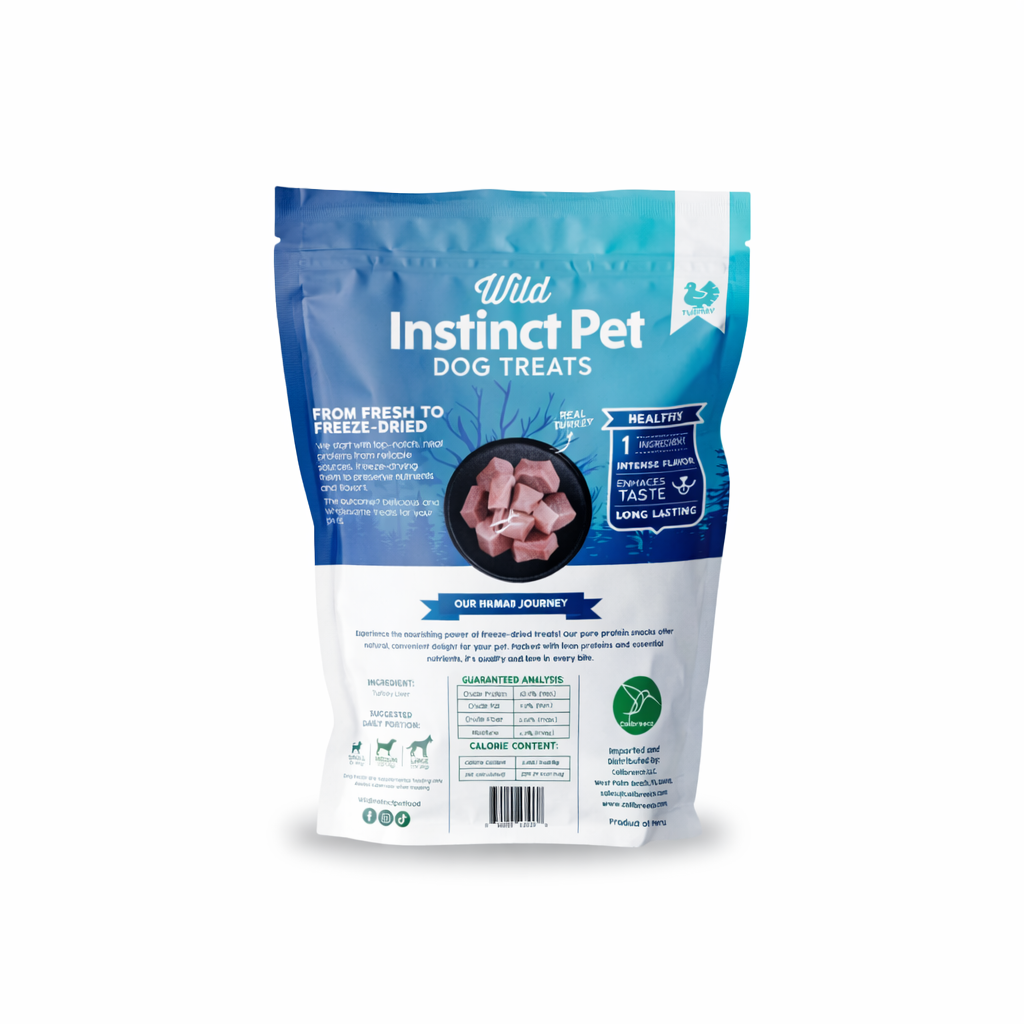
If you want a clean, nature-forward approach to rewards, Wild Instinct Pet is built around simple ingredients and high standards. Explore single-ingredient options, tighten your treat routine, and let every bite earn its place.
Contact us If you want help choosing the right treat for your dog’s goals or sensitivities, reach out to Wild Instinct Pet via our website contact page or customer support email listed on our packaging. Share your dog’s age, weight, training goals, and any known health conditions so we can point you in the safest direction.
Frequently Asked Questions
How many turkey liver treats can I give my dog per day?
Keep treats to no more than 10% of daily calories and use liver as a small part of that budget. Most dogs do best with a few small pieces per day, or crumbs for training. If you are training heavily, reduce other treats and monitor stool quality.
Can puppies have turkey liver treats?
Yes, but in very small amounts. Puppies already receive carefully balanced nutrition from growth diets, and too many organ treats can skew that balance. Use tiny training crumbs and keep the frequency conservative.
Is turkey liver good for dogs with allergies?
Turkey can help some dogs avoid beef or chicken triggers, but it is not always “novel.” If your dog has suspected food allergy, work with your veterinarian on a controlled elimination diet. Only use proteins permitted in the plan to avoid confounding results.
Should I choose turkey liver for dog training over other treats?
For difficult behaviors, liver is a strong choice because it is highly motivating and easy to portion into micro-rewards. The key is to keep pieces small and use it strategically for high-value moments. Rotate with lower-calorie treats if you are doing long sessions.
Can I feed turkey liver for dogs every day?
You can use small amounts frequently, but avoid large daily servings long-term due to the risk of nutrient excess, especially vitamin A. Many owners do best with “most days” micro-portions and periodic rotation with other single-ingredient treats. If your dog eats a therapeutic diet, confirm treat compatibility with your vet.
What is the difference between turkey liver treats and chicken liver treats?
The biggest differences are your dog’s tolerance, taste preference, and the brand’s sourcing and processing. Nutritionally, both are organ meats with similar strengths and similar overfeeding risks. If your dog is sensitive to chicken, turkey liver may be a better fit.
How do I know if I should buy turkey liver dog treats or use fresh turkey liver?
If you want convenience, shelf stability, and clean portioning, freeze-dried treats are usually easier. If you want full control over sourcing and you can manage food safety and consistent portioning, cooked fresh liver can work. Either way, keep amounts small and balanced against the full diet.
When should I stop giving liver treats and call my vet?
Stop and contact your veterinarian if your dog has repeated vomiting, diarrhea lasting more than 24 to 48 hours, severe lethargy, or signs of abdominal pain after treats. Also check in if your dog has known liver disease, pancreatitis history, or is on a therapeutic diet. Bring the treat bag and lot number to help your vet assess risk.
